Dual-Role Nursing
Welcome back!
Here’s something I hear a lot: “nontraditional nursing” means going remote, leaving the bedside, or trading your scrubs for a laptop. But that’s not the whole story. You can make a nontraditional move while staying at the bedside, just doing it a little differently.
This issue, I’m bringing back a discussion with Missy Dorsey, a nurse leader (and my old manager) who’s spent years tackling burnout and retention through an initiative close to my own heart: dual-role nursing. I was a dual-role nurse myself, splitting time between two units, and it genuinely changed how I felt about my job. So I wanted to bring you the person behind the program.
The Nontraditional Nurse spotlight
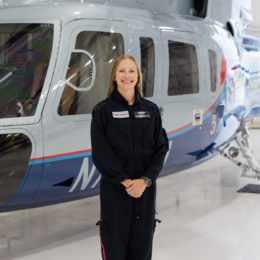
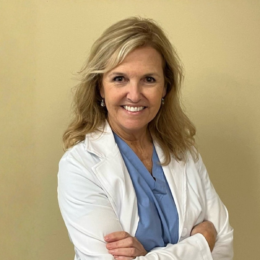
Missy is a nurse leader with about 15 years in the CTICU, where she’s spent her career tackling burnout head-on. Years ago, a nurse asked if she could split her hours between CTICU and the ED — and that simple request grew into a dual-role nursing initiative now used across 27 departments. Nurses cross-train in two units, cut the monotony of one high-intensity environment, and build a skill set that’s genuinely marketable. Some have gone on to become flight nurses or pursue CRNA programs.
In this interview, Missy walks through how the program started, what it takes to set one up (and set expectations up front), and why she believes staying at the bedside can still mean reinventing how you work.
Key Takeaways
- Nontraditional doesn’t have to mean remote or leaving the bedside. It can mean restructuring how you work in your clinical setting.
- Splitting your role across two units can reduce burnout by breaking up the monotony of one high-intensity environment.
- Cross-training builds a marketable, unique skill set which can be useful for future moves into flight nursing, CRNA programs, or leadership.
- Dual-role setups can double as a staffing solution, giving departments more flexibility during high- and low-census days.
- Clear expectations and communication about meetings, trainings, call requirements can prevent potential future problems or burnout.
Career Deep Dive
Dual-role Nursing
Perks
Variety in your work week is the big one. Instead of facing the same high-intensity unit shift after shift, you’re moving between two different environments, which keeps the job feeling fresh instead of depleting. You also walk away with a genuinely marketable skill set: Missy’s seen dual-role nurses parlay their cross-training directly into flight nursing and CRNA programs, because employers see the range of skills they have mastered. And because dual-role nurses build relationships across departments, they often become the connective tissue between units that otherwise barely talk to each other which can lead to some cool improvements and cohesion in a hospital system.
Challenges
It’s not a responsibility that goes without some work also. Dual-role nurses are on the hook for double the staff meetings, double the in-services, double the online modules. Typically, every requirement each unit has, you’re doing both. Some roles come with added call requirements, so it’s worth asking upfront exactly what you’re signing up for. Orientation is the other sticking point: stepping away from your home unit to train in a second one is a real time investment, and it can be a hard sell to a manager who’s already short-staffed. Missy’s take: it’s worth it, but go in with eyes open.
Work-Life Balance
This one cuts both ways. Done well, splitting your time breaks up burnout and gives you variety instead of grinding through the same difficult unit every shift. Done without guardrails, it can quietly turn into more total hours and obligations than a single role; especially if call requirements stack on top of a full schedule. The nurses who do this well negotiate clear boundaries up front: total hours, call expectations, and how the two schedules interact, not just which units they’re working. I personally made sure that I was only on the hook for one units call, but this should be made clear up front!
Transferable Skills
Cross-unit clinical competency is the headline, but it’s more than a resume line — it’s the ability to walk into a different kind of chaos and already know how to function in it. Add to that adaptability, cross-department communication (understanding, for instance, why an ED handoff looks different from an ICU one), and a track record that reads well for future specialty or leadership roles. It’s the kind of experience that’s hard to fake and easy to spot in an interview.
Job Search Tips
Start by asking whether your organization’s HR/scheduling platform can split an FTE across units. Most can, so this is rarely the real obstacle. The bigger lift is the pitch: come to your manager with a proposed structure, not just a request. Think through what your orientation would realistically look like (especially if you’ve already worked in the second unit an you may not need a full orientation), and loop in your education department if you can. If a formal program doesn’t exist at your workplace yet, that’s not necessarily a dead end. You might just be the one who starts it. And if the timing’s off (flu season, a surge, short-staffing), ask for a plan to revisit it rather than accepting a flat no.